
How to Build Layers With Righteous Pieces for Colder Weather
Chillier days doesn’t mean giving up on style, nor does it mean reaching for the identical baggy coat you’ve relied on for the last five winters running. Layering is a craft, and as soon as you know how fabric weight, cut, and fit combine, you can build ensembles that read as purposeful, not haphazard. Here we break down practical layering strategies using Righteous clothing, with focus on what actually keeps you warm versus what merely seems cozy. If you’ve been searching for a righteous review before investing in a layered closet, consider this a hands-on breakdown of how the pieces perform in actual weather, not just in the store display.
Effective layering hinges on temperature regulation, not just piling on fabric. Three thinner layers almost always work better than one thick layer because they capture warm air that your body heat raises the temperature of. This is elementary heat science, and it’s why climbers and urban dwellers alike rely on the same three-part system: a base layer, a mid layer, and an outer layer. We Are Righteous crafts pieces that fit neatly into each of these categories, which streamlines the process to combine and coordinate without guessing what goes with what.
Begin With Your Base Layer
The base layer rests against your skin and has a single purpose: moisture management. If this layer holds moisture in instead of wicking it off your body, the rest of your layers lose their effectiveness, and you’ll feel clammy and cold within the first hour outside. A properly fitted tee or long-sleeve from the Righteous clothing lineup works well here because a snug (not tight) fit cuts down the gap rightious brand between skin and fabric, which speeds up heat retention.
Cotton offers comfort, but it holds onto moisture once it’s wet, so if you’re preparing for genuinely cold conditions rather than mild autumn afternoons, pay attention to the weight of the garment and how the fabric is listed in the product details. A thicker jersey fabric will provide more warmth than a thin tee, even if both are the identical cut. This is why checking the fine print beats judging by image alone.
Fit also affects how the next layer rests over it. A base layer that’s too loose will crease unevenly under a mid layer, resulting in uncomfortable pressure points and patchy heat retention. Aim for something close to the body through the torso and arms, with sufficient mobility without restriction. Six to seven degrees of temperature difference can dramatically shift which base layer weight makes sense, so don’t take it for granted one tee works for all cool conditions between September and January.
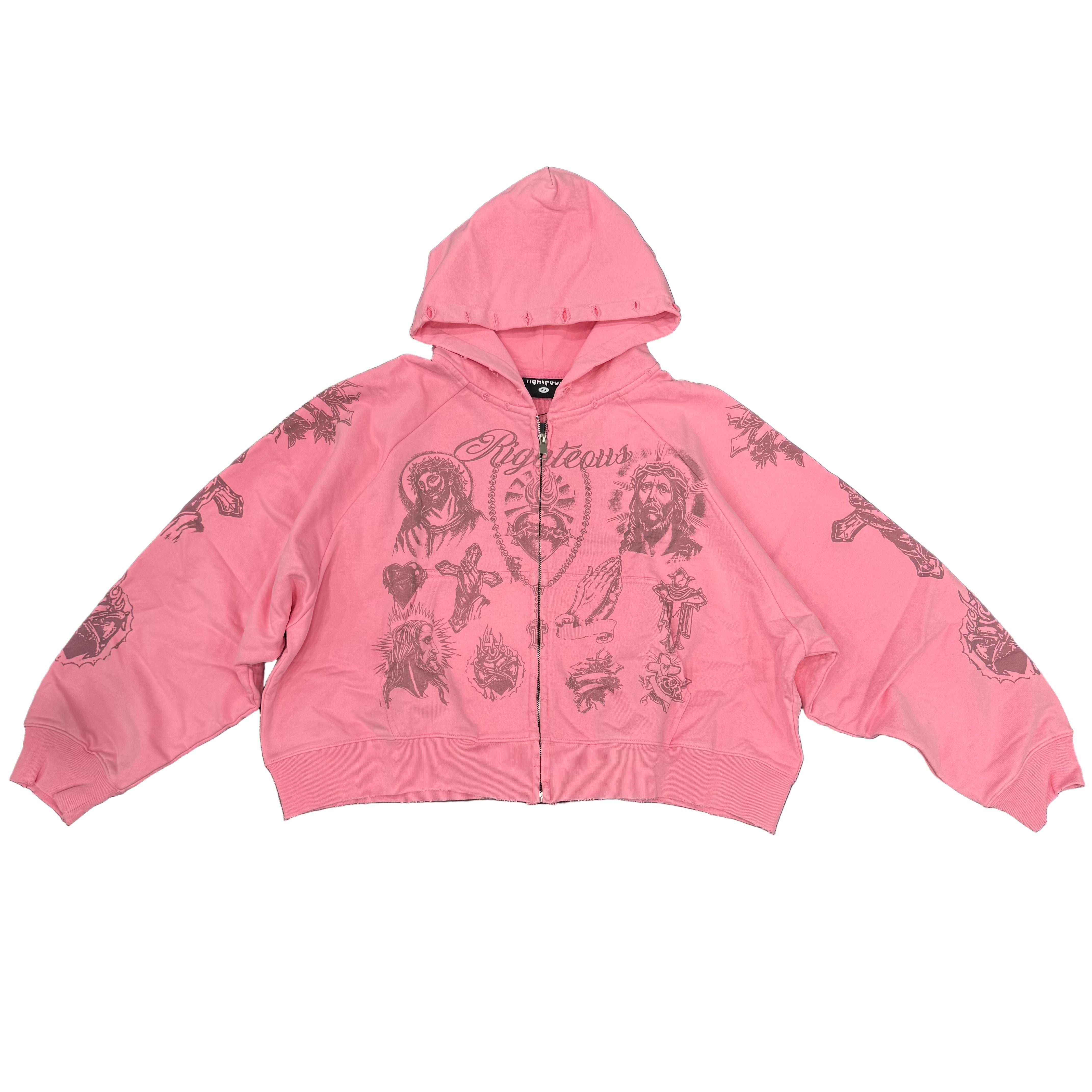
Bring In a Mid Layer to Insulate
The righteous hoodie claims its position in the lineup, right here. A hoodie serves as the heat-retaining layer, trapping warm air tight against the body while still permitting enough breathability that you don’t get too warm as soon as you walk indoors. That hood adds a useful bonus: covering the head and neck cuts down warmth loss considerably, since a excessive amount of body heat escapes through areas that remain exposed.
In selecting a hoodie for layering use, fit matters just as much as it does for the first layer, but in the opposite direction. You want enough give to easily layer a tee underneath without feeling hemmed in, but not so much excess fabric that it becomes cumbersome under a jacket. A slightly relaxed cut through the shoulders and body, with snug cuffs, tends to perform best when layered because it seals in warmth at the wrists without adding bulk elsewhere.
Because you can fine-tune airflow without fully removing the layer, zip-front hoodies offer better temperature control than pullover styles — valuable for transitional weather when mornings start cold and afternoons warm considerably. Pullover styles, on the other hand, tend to deliver marginally superior warmth retention since there’s no zip seam letting in drafts. There’s no clear superior choice; it depends on whether you’re dressing for a fixed daily commute or a day with variable temperatures.
A lot of people looking into Righteous review threads specifically ask about hoodie warmth-to-weight ratio, and the straightforward answer is that it depends on what you’re wearing underneath and over it. A hoodie is a mid layer, not a stand-alone answer to cold weather, and treating it as one is the most common layering error people make once the mercury falls below the point where a single sweatshirt is adequate.
Finish With an Outer Layer
The outer shell’s role is to stop wind and moisture while letting the layers underneath do the work of insulating. This is where a lot of people overspend or under-plan, purchasing a bulky coat that’s overkill for 50-degree weather or a thin jacket that does nothing once the wind starts blowing. Aligning your outer layer to actual conditions, rather than the coldest day of the year, preserves your layering system versatile.
For most chilly days, a medium-weight jacket layered over a Righteous hoodie and base tee covers a wide range of temperatures without demanding a change of clothes every time the forecast moves by a few degrees. The key is picking an outer layer loose enough to fit the hoodie beneath it without squeezing it, since compressed insulation becomes less effective. Squeezing squeezes out the pockets of air that were doing the real work of keeping you warm.
Pay attention to both length and width. A jacket that hits right at the hip goes well with a longer hoodie underneath, since the extra coverage prevents cold air from creeping in at the waistline. This detail seems minor, but anyone who’s felt a cold gap at their lower back on a windy day knows exactly how much it matters.
A Side-by-Side Look at Layer Functions
Examining each layer’s job side by side makes intentional shopping simpler than relying on guesswork. The table below breaks down what each layer is tasked with and what to emphasize when choosing items from a Righteous apparel collection or building out a layering system more broadly.
| Layer | Core Role | Fit Consideration | Sample Item |
|---|---|---|---|
| Base Layer | Sweat control and early-stage warmth | Snug, close to skin | Righteous long-sleeve or tee |
| Mid Layer | Trapping warmth and holding in heat | Roomy body paired with tighter wrist openings | Hoodie, Righteous |
| Outer Layer | Wind and moisture block | Loose enough to fit over the mid layer | Medium-weight jacket |
Each layer performs its separate job—none can completely replace the others. Skipping the base layer and going straight from skin to hoodie means losing the moisture management that keeps you comfortable during activity. Because wind strips heat away far faster than calm air, leaving off the outer layer on a gusty day undermines most of the warmth established underneath.
Practical Pairings Across Temperature Ranges
Instead of vague guidance, specific combos tend to help more—here’s how layering typically unfolds across a cool-weather range, framed around the Righteous clothing brand lineup. These shouldn’t be treated as strict rules, but they do offer a reasonable starting point based on how each layer type functions.
- 55-65°F: By day, a single Righteous tee typically does the job, while a hoodie stands by for when it cools down in the evening.
- 45-55°F: The base tee plus a hoodie handles the majority of conditions without needing an outer shell, especially when wind is minimal.
- 35-45°F: Full three-layer system becomes necessary, particularly if you’re outdoors for more than 30 minutes at a stretch.
- Below 35°F: Opt for a thicker base layer weight along with an insulated outer layer, since the hoodie mid layer alone won’t hold sufficient warmth.
Depending on wind, humidity, and personal cold tolerance, these ranges can vary—view them as a loose framework, not a fixed formula. For those who run cold, raising every threshold by five to ten degrees is a reasonable adjustment—one grounded in experience rather than assumption.
Mistakes People Often Make When Layering
The right pieces alone aren’t enough—since sloppy layering practices can undermine the entire system. The most common mistake is keeping each layer identically sized, which produces bulk instead of effective thermal protection. Each layer should get progressively more generous as you move outward through the system, not identically sized.
People also often overlook their extremities when layering. Wrists, neck, and ankles lose heat quickly, so a hoodie with a solid hood and fitted cuffs does more real work than people give it credit for. Paying attention only to the torso, while ignoring these details, opens holes in what would be a strong system.
Lastly, resist judging a layering system solely by its appearance on a store shelf or in a photo. In ways that stay hidden until the wind actually hits you, fabric weight, weave density, and cut all determine real-world performance. This is one reason reading a in-depth we are righteous brand breakdown, checking genuine product specs, and understanding your own layering patterns matters more than chasing fads. Instead of planning around the conditions you wish you had, assemble the system base to mid to outer and adjust every layer to the real conditions at hand.
